

Sections' Organization
- Hits: 761

Organization of Sections
Internal Regulations -Voting Procedures
- Each Section of the European Association of Professor Emeriti (EAPE) consists of all its regular members and is managed by a committee of three (3) members in total. The committee of each section coordinates the activities of the section and functions as the liaison and in the name of the Board of Directors (BoD) of EAPE.
- The committee of each section consists of: Chair, Co-Chair and Secretary. All registered members of EAPE, including corresponding members can be nominated and elected according to the By-laws of EAPE. No member can participate in more than two sections.
- All members of EAPE can participate in the section to further promote its goals. The purposes of every EAPE Section must be in full compliance with those of EAPE (Article 3 & 4 of EAPE By-laws). Means to achieve the purposes of each Section are generally those of EAPE (Article 4 of EAPE By-laws).
Certain additional actions to meet specific purposes are the following:
• It should communicate with the BoD of the EAPE which will receive appropriate feedback and any other type of relevant information on a regular basis.
• It should seek close collaboration with other Sections in order to maximize achievement of their respective goals; in this context, collaboration in regional meetings and other similar events is encouraged.
• An outreach policy will be adhered to by dispatching information on the ongoing activities of Sections; a main vehicle for the implementation of this policy shall be publishing its news and items in the EAPE Bulletin, newsletter, and the website. Also, each section will pursue, on behalf of EAPE, the participation in various funding and research European or other National or International projects and other European or International Agencies. - The term of Chair, Co-chair and Secretary is limited to 2 years. Election among all active members of the Section will take place every 2 years following election of the BoD of EAPE, preferably by electronic ballot.
- The members of each Section shall be considered active based on the regular payment of their dues to EAPE; no further financial obligation will be required through separate fees to the Section. Third party financial support or any other means of sponsorship should be handled by the EAPE Treasurer as appropriate in collaboration with the Committee of each Section.
- Correspondence of each Section will be carried out by the Chair, Co-chair and Secretary under the official logo of EAPE with cc to the EAPE Board.
- The title of Honorary Member can be awarded by the membership of the Section to a prominent personality who has excelled in the field of the Section.
Sections' Activities
- Hits: 995
The President's Letter
- Hits: 1158
The President's Letter
Prof. Emeritus Giancarlo Bracale – Naples, Italy
March 2026
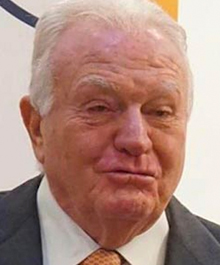 Dear Colleagues and Friends
This is my first letter as President of EAPE, having assumed the role immediately after the elections and the establishment of the Board of Directors.
I consider it a privilege and a great honor to have been appointed to the prestigious and certainly demanding role of President, which I hope to fulfill adequately with personal commitment and dedication, but above all thanks to the invaluable collaboration of all of you.
I joined with enthusiasm and interest when the news arrived that EAPE, the European Association of Professors Emeriti, had been established. I took part in the excellent first congress in Athens, very well organized by Dennis Cokkinos, which was followed by the equally well- organized congresses in Naples by Natale De Santo and in London by sir Les Ebdon.CLICK HERE TO READ THE WHOLE LETTER
Giancarlo Bracale
President EAPE
February 2026
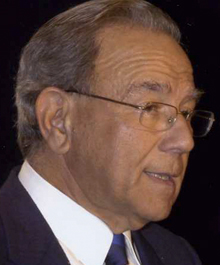 Dear Colleagues and Friends
THANK YOU!
This is my letter to you for February, but also perhaps the last letter to you as your President. On March 4 we will have elections and the President-elect Giancarlo Bracale will succeed me as the next EAPE President. Good luck Giancarlo!
I want to thank all of you very warmly for your cooperation during these two years. I think we have accomplished useful and productive work. We have carried out a Membership Survey that helped us develop an action plan, we initiated a monthly program of Sections' webinars many of which were of excellent quality, we produced three Position Statements, on "Continuation of Academic Activities", on "Peace" and on "Academic Freedom", we had an Interim Congress in Naples, organized by our Italian colleagues, our membership increased and more colleagues were involved in our activities, the number of scientific sections increased to nine and their activities intensified. CLICK HERE TO READ THE WHOLE LETTER
George Christodoulou
President EAPE
This email address is being protected from spambots. You need JavaScript enabled to view it.
January 2026
Dear Colleagues and Friends
Happy New Year!
I wish you all Health (on an individual and family level) and Peace (on a global level)!
Our EAPE is progressing and we look forward to continuation and expansion of this progress in the future. Let me remind you of our 4th EΑΡΕ Congress to take place in Athens, 11-13 June 2026. Please visit our website and submit your proposals.
On behalf of the Board I have pleasure in forwarding to you a Position Statement of our Association, on Academic Freedom... CLICK HERE TO READ THE WHOLE LETTER
George Christodoulou
President EAPE
This email address is being protected from spambots. You need JavaScript enabled to view it.
December 2025 - January 2026
Dear Friends and Colleagues
As the Year draws to a close, I am communicating with you to fulfill the regular monthly communication with you but also to wish you a pleasant, peaceful, productive, prosperous and above all HEALTHY New Year 2026. The value of Health is becoming more and more vital as we grow older, not so much as provision of means for treatment but more as Prevention and Health Promotion.
With reference to the international scene, we have unfortunately not seen much progress regarding mutual understanding, peaceful resolution of threatening situations and adoption of a common stance on vital issues like violence, abuse of civil rights, discrimination, non-equity and tolerance of unethical practices. Our Europe, with its noble tradition, is unfortunately not immune to the above.
An issue to which the academic community is (or should be) particularly sensitive is Academic Freedom that is also threatened in our times.... CLICK HERE TO READ THE WHOLE LETTER
George Christodoulou
President EAPE
This email address is being protected from spambots. You need JavaScript enabled to view it.
October 2025
Dear Friends and Colleagues
With my previous month's letter to you I expressed the hope that at last Peace will come back to our world and Europe. I also forwarded to you our Position Statement on "Preservation of Peace". I would certainly be accused of having delusions of grandeur if I dared to say that peace in the Middle East was achieved as a result of our Statement! Yet, it is with great relief that all of us witnessed the peace agreement. Let us hope that it will last.
Turning now to our matters in the EAPE, we had three wonderful sections' webinars during last month, on the relationship of Medicine and Music, on Artificial Intelligence and on issues related to the Young and Old-olds.
At the end of this month (30 October 2025, 3.00 pm, Rome time) our section "The Elderly in our Society" will organize an interesting and ambitious webinar.... CLICK HERE TO READ THE WHOLE LETTER
George Christodoulou
President EAPE
This email address is being protected from spambots. You need JavaScript enabled to view it.
September 2025
Dear Colleagues and Friends
The summer is almost over for most of us, although some people feel that the most pleasant part of it is late August-beginning of September.
This summer has not been particularly pleasant. We have had a lot of natural and human-made disasters in Europe: catastrophic wildfires, floods, earthquakes...Our natural surrounding is gradually being destroyed. Is this due to climate change? Is it due to human indifference? Is it due to human malevolence? Is it due to the punishment of humanity by the super-God Zeus sent to us by thunder from Olympus mountain?
WARS are continuing! It is indeed surprising that, in spite of the development of the neo-cortex in humans and the miraculous achievements of humanity, yet we are unable to resolve conflicts peacefully and continue behaving in primitive ways based on aggression and power rather than empathy and justice.... CLICK HERE TO READ THE WHOLE LETTER
George Christodoulou
President EAPE
This email address is being protected from spambots. You need JavaScript enabled to view it.
June-July 2025
Dear EAPE Colleagues and Friends
The Drums of War have not ceased since our previous communication. On the contrary, they have become louder. For this reason, our Board has decided to prepare a Position Statement for Peace and against War. Does this mean that EAPE has decided to adopt a political position? By no means. On the contrary, we will be very careful to avoid misuse or abuse of our statement for political reasons. Our Statement is not meant to justify ideologies or persons. This is by no means our intention. BUT we cannot be indifferent to the loss of human life and the suffering produced by armed conflicts in our world. We cannot reduce ourselves to the role of observer when faced with tragedies. If we, Emeriti Professors, do not react, who else can do so?
The obvious question arising from the purpose of issuing a Peace Statement is what effect it will have. Probably minimal... CLICK HERE TO READ THE WHOLE LETTER
George Christodoulou
President EAPE
This email address is being protected from spambots. You need JavaScript enabled to view it.
May 2025
Dear EAPE Colleagues and Friends
This is my monthly letter to the membership of the European Association of Professors Emeriti (EAPE) but it may be of interest to a broader circle of recipients as well.
Our World is undergoing dramatic changes in the last months. Conditions that we perceived as stable are now vague and unclear, insecurity arising from this is gradually making its appearance, the μέτρον ("nothing in excess") of ancient Greek philosophy is replaced by preference of extremes and one wonders what will come next.
It is true that these changes (societal, political, economic, cultural, ethical etc) did not arise out of the blue. They evolved step by step and they were accepted by the public step by step. It is also true that since ancient times, philosophers like the "obscure" Heraclitus ("τα πάντα ρει") attribute positive qualities to change ("the only constant is change"). The crucial question to ask is "to which direction should this change occur?" Change can be for the better but also for the worse.
Time will show... CLICK HERE TO READ THE WHOLE LETTER
George Christodoulou
President EAPE
This email address is being protected from spambots. You need JavaScript enabled to view it.
April 2025
Dear EAPE Colleagues and Friends
1. EAPE Webinars
Two important webinars of our scientific sections on Nature Protection and Mental Health will take place respectively on the 7th April and 9th April 2025. You can find the programs and the links in the relevant issue of our Newsletter. Our program of webinars is working fine and each month we have a webinar prepared by one of our nine sections.
The general consensus that coincides with my own opinion is that most of them are well organized and of good quality. The problem is that they are not well-attended. CLICK HERE TO READ THE WHOLE LETTER
George Christodoulou
President EAPE
This email address is being protected from spambots. You need JavaScript enabled to view it.
February 2025
Dear EAPE Colleagues and Friends
This is my monthly communication with you.
Before dealing with issues within the narrow range of our interests, I am tempted to comment on what is currently happening in our world.
We were taken by surprise. Was this surprise justified?
Certainly not. This reversal in almost everything in international politics has been clearly announced and now came the time for its implementation. Then, why were we surprised? For a variety of reasons, wishful thinking having played a major role. The fact is that this development created yet another reason for people to experience stress, feel insecure and perceive life under a negative angle.
I do not wish to say more as my position does not allow taking sides. I can only express the wish that this change will have positive consequences (like, for example, peace) in addition to the negative ones arising from sudden homeostatic changes like the one humanity (and humans) are currently experiencing. CLICK HERE TO READ THE WHOLE LETTER
George Christodoulou
President EAPE
This email address is being protected from spambots. You need JavaScript enabled to view it.
January 2025
Dear Colleagues and Friends, members of our Team
FIRST AND MOST IMPORTANT, warmest wishes for the Year 2025 that has just commenced its course.
People usually wish for the New Year to be "uneventful". Yet, for a group full of vitality and thrust like the EAPE (this is not an attempt to be humorous) this is not an appropriate wish. We WANT events to happen, provided that they are towards a positive direction. We WANT to participate, we WANT to continue producing, we WANT to convey our experience to the younger generation of scientists, we WANT to teach them dexterities that we have acquired during our active scientific life and, most importantly, we WANT to ask them to consider our ethics positions that have shaped our attitudes.
Let me now explain why it is not a joke that we are "a group full of vitality and thrust". Because the mere fact that we are members of an ambitious group like the EAPE proves it. We could abstain and do nothing. But no! We keep on working, contributing and producing to the best of our ability. The report of activities that follows highlights this fact and the same stands for the previous reports. CLICK HERE TO READ THE WHOLE LETTER
George Christodoulou
President EAPE
This email address is being protected from spambots. You need JavaScript enabled to view it.
November 2024
Dear Colleagues and Friends,
This is my monthly communication with you.
The international political and socio-economic situation does not promote well-being of humans in this world. Yet, there is always hope that good will, maturity, wisdom and resilience will prevail in order to control and prevent at least human-made disasters. We can do little for natural disasters produced by climate change but we can do a lot to reduce human-made disasters, like wars.
Concerning our micrography of the world, the world of Emeriti Professors, I have some very good news for you indicating that the EAPE is moving forward with quick steps... CLICK HERE TO READ THE WHOLE LETTER
George Christodoulou
President EAPE
This email address is being protected from spambots. You need JavaScript enabled to view it.
October 2024
Dear Friends and Colleagues,
Time is passing by with unprecedented speed (at least this is the way many of us "old timers" perceive it) and we can't find time to do all the tasks that we schedule (including swimming - this weekend in Greece was very hot, ideal for it).
Yet, the international situation does not permit optimism and the luxury of remaining free from concerns. People are being killed every day and the drums of war are heard loudly and clearly. Nobody can be indifferent to the brutality of war.
If, however, we concentrate on our EAPE we have some very good news:
- The former EAPE President Prof. Natale de Santo has informed us that the President of the Italian Republic Prof. Sergio Mattarella has awarded a President's Medal to our Association, for the Day of Older Persons' events (1st October) organized under the guidance of Prof. de Santo.
This is an important distinction provided to our Association for the second time. - The EAPE, in collaboration with other organizations, is organizing an International celebration of the World Mental Health Day, to be held in Athens, at the office of the European Parliament, οn the 10th October, 4.00-6.30 pm. (Athens time). Our Section on Mental Health will be represented by four of its members, Dusica Lecic-Tosevsky, George Ikkos, Nancy Papalexandris and George Christodoulou. The event will be a hybrid one and those interested can attend it electronically.
The zoom link is:https://us02web.zoom.us/j/82510123306 - I am happy to report that the Internal regulations of our Sections, as modified by a Committee composed of the President, Dennis Cokkinos and George-Andrei Dan has been approved by the Board and will be uploaded on the EAPE Website.
Thus, the Sections will have guidance concerning how to function, how to carry out elections etc. An item has been added concerning the possibility to award the title of Honorary Member to a person who has excelled in the area covered by the relevant section. - The EAPE Board has authorized the President and Former President Prof. Cokkinos to represent EAPE and offer salutations in two important meetings where our Association will be a collaborating organization:
Hippoctatic Foundation Congress, Hippoctatic Island of Kos, 13-21 October 2024.
9th European Conference on Tobacco control, Athens 22 October 2024. - During our Board meeting of the 25 September, the President-elect Prof. Giancarlo Bracale provided preliminary information on the EAPE Interim Congress to be held in 2025 in Naples (the main EAPE Congress will be held in 2026 in Athens). Further information will follow.
- I am happy to say that the Membership of our Association has increased. Not dramatically but it has increased. Could each of us please try to recruit one member during this month? And, could each of us pay one's dues? I am sorry I have to deal with such trivialities. If I was you I would certainly be annoyed by this appeal but what can I do?
The only thing that I and the rest of my board colleagues can do is to make membership in EAPE worth the yearly dues of 50 euros. If you have ideas that can further increase our performance towards this end, please do not hesitate to communicate your ideas to me.
- The former EAPE President Prof. Natale de Santo has informed us that the President of the Italian Republic Prof. Sergio Mattarella has awarded a President's Medal to our Association, for the Day of Older Persons' events (1st October) organized under the guidance of Prof. de Santo.
With cordial regards and best wishes.
George Christodoulou
EAPE President
This email address is being protected from spambots. You need JavaScript enabled to view it.
Mobile phone: 0030 693 6743498
September 2024
Dear Friends and Colleagues,
Autumn is considered as a melancholic season. It is associated with the painful return from the summer vacations, is often accompanied by rain fall, fallen leafs ("les feuilles mortes") reminiscences from the time we were students and were going back to school from the summer carefree happiness (for those of us who can still remember!) etc.
However, this summer was not a particularly happy period. With at least two major wars occurring with fierce violence and many victims, with the climate change producing catastrophic wildfires (e.g. Greece, Portugal), floods and other natural disasters as well as many tragic losses, we can hardly call it a happy period in the life of humanity and our own lives. Let us hope then that, in spite of being "melancholic", autumn will remedy some of the consequences of these human-made and natural disasters.
But, enough with this introduction!... CLICK HERE TO READ THE WHOLE LETTER
August 2024
 Dear Friends and Colleagues,
I hope that you are all well and tolerant. This continuing heat wave is difficult to tolerate but I am sure that we will manage to at least survive. Following this optimistic prediction I would like to share some brief but important information with you
1. Elections of Sections
Officers.
The elections for the leadership of our sections have been carried out succesfully and uneventfuly and we now have new officers. The elected chairs are as follows:
Section on Mental Health
Dusica Lecic-Tosevski
Section on Culture
Athanasios Dianandopoulos
Section on Ethics
Luigi Campanella
Section on Health Prevention and Promotion
Dennis Cokkinos
Section on Nature Protection
Paolo Ciambelli
Section on Meeting the Needs of Children and Old-olds
Halima Resic
Section on Enrollment and Advocacy
Nikos Markatos
You will find the full information on all elected officers as well as the new list of members of each section in the Sections' page of our website. Once again I would like to underline that we are "investing" in our sections for the implementation of the mission of our Association. I would like to encourage you to join one or two (maximum) of our sections with an e-mail to our secretary Georgia Drosatou (e-mail: This email address is being protected from spambots. You need JavaScript enabled to view it.), accompanied by a short CV and a copy to me (This email address is being protected from spambots. You need JavaScript enabled to view it.) and to the chair of the section you want to join.
2. Sections' and Committees'
Seminars and Webinars.
The program of the sections' seminars and webinars up until December 2025 is now ready and has been uploaded on our website. We will start with two important events.
On the 1st October 2024 we will have the celebration of the Day of Older Persons in a great number of cities in Europe. Natale de Santo and the Committee to celebrate this event have coordinated this impressive program the details of which will be available soon. We are thankful to them for organizing these events and thus promoting the visibility of EAPE.
On the 10th October we will have the celebration of the World Mental Health Day that will take place at the impressive building of the Hellenic Committee of the European Parliament in Athens. The organizers will be our EAPE, the Society of Preventive Psychiatry and EPIONI, an Advocates' organization and it will be a hybrid event in order to allow people from all over Europe to attend electronically. Our Section on Mental Health will have an active role to play in organizing the event and participating in it with three of its members (Dusica Lecic-Tosevski, George Ikkos and myself). Michel Botbol will help in organizing the event.
3. One of the items discussed during our last Board meeting was the Financial situation.
It is not desperate but it does not allow us to fund our programs without external assistance or in kind assistance from some board members. For example we can not fund technical assistance for the webinars of our sections. Our Treasurer Paolo Ciambelli has been asked to prepare a Financial Action Plan, but if you have ideas on how we could improve our finances, please do not keep them to yourselves. Let us know urgently!
4. Please do not forget to read the exciting current issue of our BULLETIN.
It is very interesting in content and very remarkable in appearance. George-Andrei Dan, our Editor and collaborators have carried out excellent work!
With warm (but not too warm) personal regards.
George Christodoulou
EAPE President
This email address is being protected from spambots. You need JavaScript enabled to view it.
July 2024
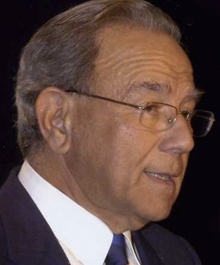 Dear Colleagues and Friends,
I promised you that after the first "President's letter"... a second one would follow.
Here it is!
1. Sections' elections
In line with the Association's By-laws, following the Board elections we must hold elections of officers of our scientific sections. The Board decided that the elections should be carried out by the co-ordinator of each section. I suggested a simple procedure for voting by e-mail and I am happy to say that the voting was carried out smoothly in four sections, with the following results:
Section on Mental Health
Chair: Dusica Lecic-Tosevski
Co-chair: George Ikkos
Secretary: Michel Botbol
Section on Culture
Chair: Athanasios Dianandopoulos
Co-chair: Gaetano Thiene
Secretary: Dimitris Dougenis
Section on Ethics
Chair: Luigi Campanella
Co-chair: Lucija Cok
Secretary: Michael Biggs
Section on "Meeting the needs of young and old-olds"
Chair: Halima Resic
Co-chair: Dusanka Micetic-Turk
Secretary: Oliver Racz
The procedure for the election of the remaining three sections is on its way. Dennis Cokkinos and Maria Ochsenkuhn-Petropoulou will organize the elections for them.
Congratulations to all elected officers and our gratitude to the coordinators of each section who have organized and have carried out the voting so smoothly.
Jo Ehrich, Luigi Campanella, Thanos Diamandopoulos, thank you very much.
Soon the program of webinars for the Sections will be communicated to you.
2. The Day of Older Persons (1st October).
The preliminary program of activities related to the Day of Older Persons has been communicated to the Board by Natale de Santo. They include events to take place in Kosice, Sarajevo, Athens, Messina, Naples and Frascineto (Univ. of Calabria). A rich program to be further enriched.
3. Interim Congress in Naples.
In between the official Congresses of EAPE in London (2024) and Athens (2026) there will be an interim Congress to be held in 2025 in Naples. The organizer of this event is the President-elect Giancarlo Bracale.
4. I would like to urge the EAPE Membership to make appropriate use of the EAPE Position Statement on "continuation of Academic Activities by Emeriti and Retired Professors"
In Greece, legislation has been voted upon by the Parliament that is in accordance with this request. Perhaps colleagues in the rest of Europe can use our Position Statement to push for Government or University decisions that would allow those of us who would like to continue our academic activities, to be able do so.
That is all for now!
Until next month, wishes for a happy or at least uneventful summer.
George Christodoulou
President EAPE
This email address is being protected from spambots. You need JavaScript enabled to view it.
June 2024
Dear Colleagues and Friends,
In the framework of the need for more frequent communication of the Board with the Membership, I thought that a "President's Letter" to the members of our Association would serve this scope. The aim is to publish the "letter" every month covering a limited number of topics each time.
1. The EAPE Position Statement on continuation of Academic Activities by Emeriti and Retired Professors
This Statement that has already been published here (and in the rest of the EAPE Media) has been accepted favorably by our colleagues. It has been sent to the Ministry of Education In Greece and to the Deans of all Greek Universities. We already had a response by the Ministry stating that most points we raised had already been dealt with by a recent Law of the Ministry of Education. I responded by noting that additional moves to see to it that there will be actions to IMPLEMENT this favorable legislation are needed and that we would be willing to collaborate on this issue.
Yet, it should be noted that our Association is EUROPEAN. Under this light our Position Statement should be conveyed to ALL Government authorities and Universities in Europe. Please feel free to use it when addressing the authorities in your Country. If you want me to support you in this, please let me have the relevant e-mail address and I will help with pleasure.
I should point out that academic work after retirement should be considered as a RIGHT and not as a DUTY.
2. Mental health in Old Αge
From 6 to 8 June 2024, the Crown Prince Alexander and the Crown Princess Catherine of Serbia organized an important Congress of the Serbian Diaspora, in Belgrade.
A very successful and well-organized Congress. Three members of the EAPE Section on Mental Health organized a well- attended symposium on Mental Health in Old Age. A lot of issues were discussed and clarified during the discussion that followed. The EAPE perticipants were Dusica Lecic-Tosevski (Serbia) George Christodoulou (Greece) and Michel Botbol (France).
3. The EAPE Survey
We have now received the responses of the Membership to the EAPE questionnaire.
The response rate was very low (only one in eight members responded) and this clearly indicates a minimal interest and involvement in our Association that must be remedied.
From the analysis of the resp onses, however, some useful conclusions were obtained. I am analyzing them now but I can give you some clues.
People seem to be happy with the EAPE Media (Website, Bulletin, Newsletter) satisfied with the previous EAPE Congresses, with the sections' seminars (although many members do not have the time to attend) most responding colleagues want to participate as speakers in these seminars, three more sections have been proposed and most respondents state that each one of them CAN recruit at least one new EAPE member!
These and other responses will be taken into consideration in designing our ACTION PLAN for 2024-2026.
That is all for now, until next month.
Enjoy the Summer,
George Christodoulou
President EAPE
This email address is being protected from spambots. You need JavaScript enabled to view it.
EAPE Section Needs and Wishes
- Hits: 1720
The EAPE Section Needs and Wishes of Young and Elderly People hereby announces its new research project on February 14th 2024 and invites EAPE members to discuss and participate.
For scientific and statistical reasons, we are focusing on a sample/model that explores the understanding of spirituality among young patients with chronic kidney disease, dialysis and transplantation and their pediatric nephrologists.
Methods used include narratives from patients and their physicians and their responses to age-appropriate questionnaires (MiniQs) on spirituality.
In addition, we will test the hypothesis that philosophy and complex systems thinking can illuminate our findings to the extent that the theoretical conclusions can be translated into practice.
In conclusion, the EAPE section Needs and Wishes of Young and Old is launching a multi-center survey in Europe and the US to investigate the impact of spirituality on children with CKD, dialysis and transplantation and their nephrologists.
This EAPE survey is officially supported by the European Society of Pediatric Nephrology (ESPN). Therefore, Jochen Ehrich and his team will invite more than 50 pediatric nephrologists from 48 European countries to participate. After our video lectures, the video presentations will be available on Youtube for all interested colleagues.
Last but not least, I would like to emphasize that the range of topics selected during my three years of chairing the section is much broader than the needs and diseases of patients with CKD, but this will be the content of our upcoming video lectures in 2024.
Jochen Ehrich - - Children's Hospital of Hannover Medical School, hannover, Germany
The introductory lecture is given by the President of EAPE Professor Sir Leslie Ebdon
Jochen Ehrich's Lecture
explains the following:
1. The language and terminology of the various concepts of needs and wishes.
2. The role of philosophy and complex systems thinking in medicine.
3. The instructions for our research project.
4. The opportunities and limitations of this research.
5. The need for a 3rd enlightenment in Europe.
Robert Woroniecki’s Lecture
will deal with the following topics:
Human spirit has been defined in different disciplines by many various ways. Robert defines spirituality as a sense of purpose in life and as our relationships with all living creatures or “Higher Power” on planet Earth. The World Health Organization (WHO) and Joint Commission on Accreditation of Health Care Organizations have identified spirituality as an important aspect of healthcare. Research over the last several decades demonstrates an association between spirituality and clinical outcomes, coping, and quality of life in different adult chronic diseases.
However, fewer studies have examined human spirit and spirituality in pediatrics and all its subspecialties and diseases to assess its specific role in children’s health. Although there are validated scales to measure hope in children based on the premise that children are goal oriented and that their goal-related thoughts can be understood, they were described in limited samples in healthy children. For example, spirituality in children with chronic kidney disease remains mostly unexamined.
Robert seeks to summarize current literature examining the role of spirituality in pediatrics and to identify gaps in this knowledge. It is investigating how the human spirit can be measured so that the results of the EAPE study on the needs and wishes of young patients with chronic kidney disease can be incorporated into the assessment of quality of life.

Connect with the EAPE in Linkedin
Click on the icon above to connect with us
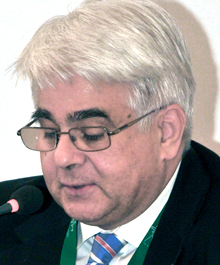
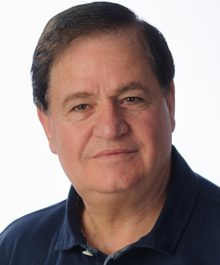
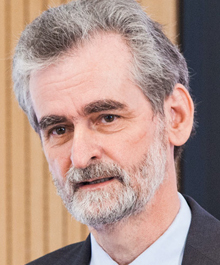
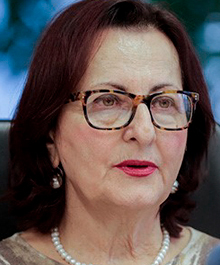
Meet Our Board of Directors
| |
 |
 |
 |
|||
 |
 |
 |
 |
|||
 |
||||||
The President's Letter
March 2026
Prof. Emeritus Giancarlo Bracale – Naples, Italy
Dear Colleagues and Friends
This is my first letter as President of EAPE, having assumed the role immediately after the elections and the establishment of the Board of Directors.
I consider it a privilege and a great honor to have been appointed to the prestigious and certainly demanding role of President, which I hope to fulfill adequately with personal commitment and dedication, but above all thanks to the invaluable collaboration of all of you.
I joined with enthusiasm and interest when the news arrived that EAPE, the European Association of Professors Emeriti, had been established. I took part in the excellent first congress in Athens, very well organized by Dennis Cokkinos, which was followed by the equally well- organized congresses in Naples by Natale De Santo and in London by sir Les Ebdon.CLICK HERE TO READ THE WHOLE LETTER
Giancarlo Bracale
President EAPE

EAPE's Position Statement
On Academic Freedom by Emeriti Professors
The European Association of Professors Emeriti (EAPE) considers that it is our right but also our duty to defend Academic Freedom.
- Drawing on our long academic experience, we, Professors Emeriti of Europe, firmly consider that we have the responsibility to defend this principle that has survived throughout ages and to support the rights of members of the academic community to freely express their opinions even if these opinions are not in line with the prevailing ideology.
- We object to undue interference, restriction or intimidation of academics, being confident that researchers are fully aware that Academic Freedom carries with it responsibilities like respect for evidence, intellectual honesty and adherence to ethical values and practices. It is the responsibility of the relevant academic institutions only, to safeguard that these responsibilities are observed.
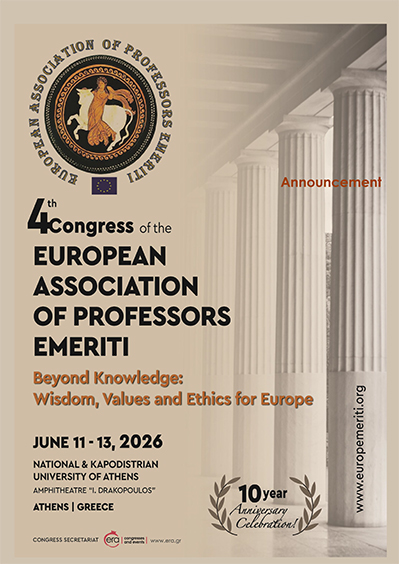
4th EAPE CONGRESS
JUNE 11-13, 2026 ATHENS
Dear Colleagues and Friends
This will be an Anniversary Congress, marking 10 years of productive contribution of our Association to Science and Society.
The Congress promises to be an extraordinary one scientifically and socially. It is open to everyone, not only Emeriti but also younger colleagues who have not yet reached our Status!
So, please go ahead and send us your abstracts ASAP.
The sooner we get them the better.
Click HERE to view and/or download the Announcement.
Feel also free to send me your comments: Profgchristodoulou@gmail.com
TO REGISTER please follow the link:
https://era.eventsair.com/4th-congress-of-eape/reg
TO SUBMIT YOUR PROPOSAL and abstract please follow the link: https://era.eventsair.com/4th-congress-of-eape/presentation
Further details will follow.
Cordial regards to All.
George Christodoulou
President EAPE
Mobile: +30 693 6743498